News
Kejawen Folk Art, Nini Thowong
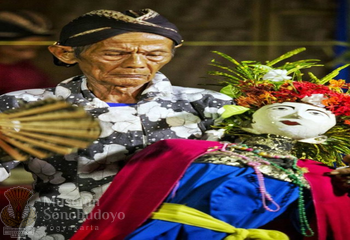
Indonesia is a country with diverse traditions and cultures that contain rituality and sacredness. One of the Javanese folk arts with high ritual elements is Nini Thowong, an activity of inserting spirits into dolls. In ancient Javanese beliefs, the spirit world is believed to have magical powers in helping humans. Nini Thowong is a tradition from the Grudo people whose mythical functions are to cure disease, ask for safety, call for rain, look for lost items or treatment. More precisely, Nini Thowong is located in Panjangrejo Village, Pundong District, Bantul Regency and has been around since 1938, at that time the performance was still very simple, only using gongs and drums as accompaniment music. Nini Thowong herself is led by a handler called Mbah Paeran. The chosen Mbah Paeran must be an abangan (a person with strong kejawen).
Nini in Javanese means grandma wedok, while thowong means empty. Therefore, Nini Thowong means an old woman (spirit) and enters an empty place, namely a doll. The Nini Thowong show is played by women who dance while holding dolls led by Mbah Paeran. The existence of the doll is used as a signal medium to seek medicine with the help of spirits. The doll that is held can nod, spin, wave, shake its head, and jump up and down. The audience in the Nini Thowong show must maintain good manners, both in speech and action. Because if there are spectators who do not maintain good manners, then Nini Thowong will be angry and crash her body into the audience.
In Bantul Regency, there are two hamlets that play Nini Thowong, namely Grudo hamlet and Candran hamlet. In the Grudo hamlet to this day, the Nini Thowong tradition is still preserved because the original rituals are still strong, such as the entry of spirits into the tomb, dolls made of bamboo, dipper, foam, shell, and straw. While in Candran hamlet, Nini Thowong does not carry out the ritual at the funeral, the dolls are replaced by wearing masks and have been packaged into tourism arts.
Photo source : Kumparan.com
Writer : Lensa Khoirul Jannah Sonida